Paging the Mineral You Didn’t Know You Needed
Hi there, if counting sheep feels like your full-time job and your pillow sees more tossing than snoozing, I’ve got a little-known hero to introduce: magnesium.
This unsung mineral isn’t just for muscle recovery or gym buffs. It’s a critical player in helping your body wind down, your brain shut up (gently, of course), and your sleep deepen. And most of us? We're not getting nearly enough of it.
Let’s dive into the science, signs, and simple hacks to help you tap into the power of magnesium—because everyone deserves a better night’s sleep (yes, even you, Netflix-binger).
So, What’s the Big Deal with Magnesium?
Magnesium is involved in over 300 biochemical reactions in your body—including several that are directly linked to sleep. Think of it as your nervous system’s chill-out manager. Without it, your body struggles to relax, stay asleep, and recover overnight.
Here’s what makes it such a sleep MVP:
🧠 1. It Calms an Overactive Brain
Magnesium regulates GABA, the neurotransmitter that tells your brain, “Hey, it’s bedtime—let’s stop overthinking.”
🧪 Low magnesium = low GABA = racing thoughts at 1 AM about that awkward thing you said in 2013.
🌙 2. It Helps Regulate Melatonin
That’s right—magnesium assists in the production of melatonin, your body’s natural sleep hormone. It also helps control your circadian rhythm (your internal clock).
🕒 When melatonin’s off, your sleep schedule becomes “mystery hour.”


🧘 3. It Relaxes Muscles (and Minds)
Restless legs? Nighttime cramps? Magnesium is a natural muscle relaxant that eases tension and prevents the twitchy stuff that keeps you from drifting off.
💡 Pro tip: If you wake up feeling like you just fought a bear in your sleep, your magnesium levels may be MIA.
🧯 4. It Helps Lower Cortisol (the Stress Hormone)
Chronic stress = high cortisol = poor sleep. Magnesium helps modulate your stress response by keeping cortisol in check.
📉 Translation: Less “wired and tired,” more “relaxed and out like a light.”
Are You Low on Magnesium? Here Are the Clues
I see these symptoms in patients all the time—and they’re often dismissed:
- Difficulty falling or staying asleep
- Muscle cramps or twitches
- Anxiety or irritability
- Brain fog
- Eye twitches
- Chocolate cravings (yep, your body is smart!)
Simple Magnesium Sleep Hacks
🛏️ 1. Start with Food:
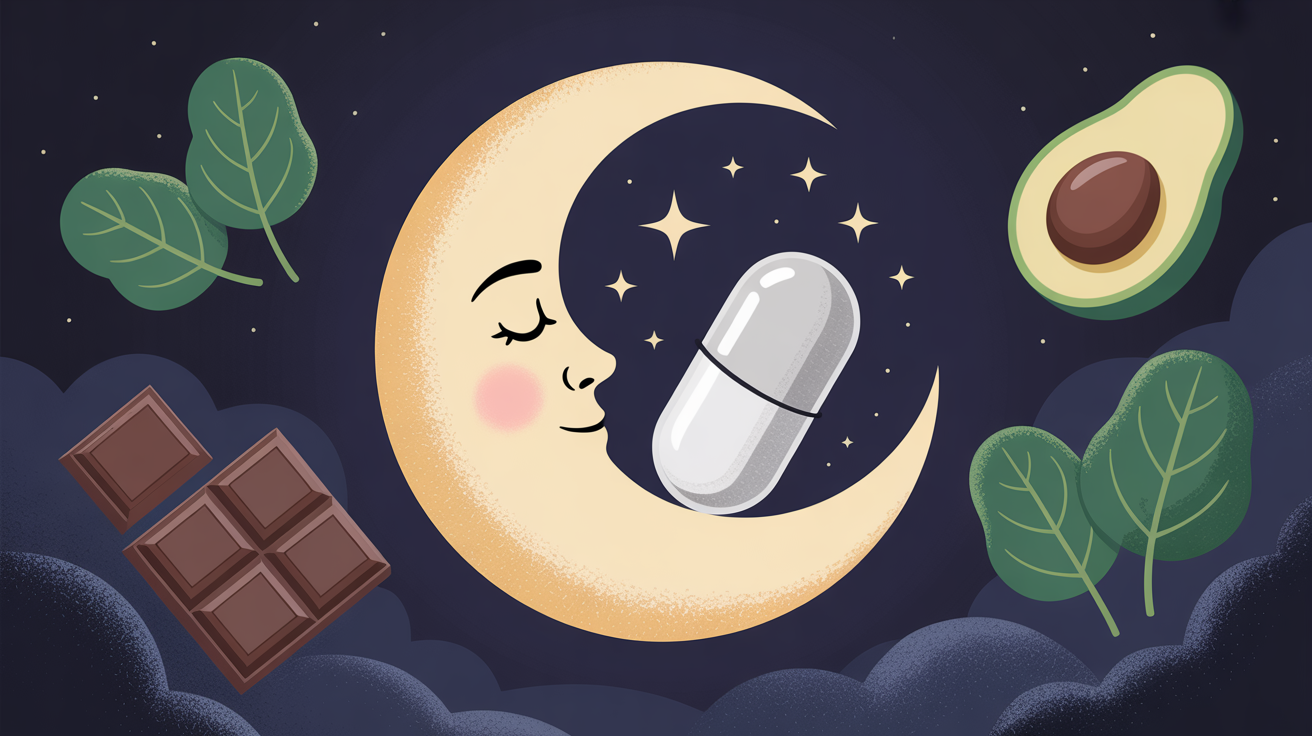
Magnesium-rich foods include spinach, pumpkin seeds, black beans, avocados, bananas, and dark chocolate (yes, permission granted).
💊 2. Try a Supplement:
Look for magnesium glycinate or magnesium citrate—they’re easier on digestion and more bioavailable.
🛁 3. Bathe in It:
Add Epsom salt (magnesium sulfate) to your bath. It's relaxing, and your skin absorbs it beautifully.
🧘 4. Pair with a Wind-Down Routine:
Magnesium works best with consistency. Take it around the same time daily, ideally 1–2 hours before bed, and pair it with calming rituals like reading, stretching, or turning off that last email notification.
Sleep Better, Naturally
Magnesium isn’t a magic wand—but it’s as close as we get in sleep science. It helps your brain power down, your muscles relax, and your stress melt away. In short: it sets the stage for deeper, more restful sleep.
If sleep feels like a nightly battle, magnesium might just be your undercover hero. And if you’re still unsure, chat with your doctor—you deserve answers (and some solid shut-eye).
Until then, breathe deep, dim the lights, and let magnesium do its thing.
Sweet dreams…